Thursday, February 25, 2021

A1 technology production recap notes

Quick factual recap for A1 course work- PRODUCTION TECHNOLOGIES


Films are greatly impacted on budget

-       Warner Bros: wonder Woman $150 million, Aquaman $160 million, Wonder woman 1984 $200 million

-       Belstone pictures: Tank 432 £150k, Tucked £49k


Production technologies:

Cameras/ storage

Lights

Green screens

Motion capture

CHI graphics and animation

Other editing


Cameras:

-       Belstone pictures used the Arri Alexa camera (cost £13,000 pounds to hire), a top-of-the-line digital camera used for high end budget movies and adverts.

-       They also used a Zeiss Super Speed MKIII T1.3 lens set. A £350 daily hiring fee lens that is very expensive to hire for a low budget company and is a wide-angle lens that is used to create a claustrophobic atmosphere in the tank.

-       Because the Arri Alexa is digital, it stores all of the video footage on a memory card, which is a low-cost option than film reel.  Using a digital camera also means you can use a higher shooting ratio because you can shoot and store more footage digitally in a cheap way, meaning you can try multiple angles for each scene at a low extra cost. 

-       Some positive impacts of production of using digital cameras are that they are quite light and more portable, so they are easier to use in handheld shots and to film inside the tank as well as saving lots of money as its not as expensive as 35mm film. Another advantage of using this digital camera is that the camera doesn’t require a large crew to operate.

-       Some disadvantages of digital footage are that the audience can tell the difference between the grit of digital and reel film footage. The footage doesn’t look as nice and sometimes the image quality can drop depending on the quality of lighting.

-       Due to Belstone low budget, they shot 10-12 pages of the script everyday rather than the normal feature film of 1-2 pages of script a day. This meant they were rushed in the shooting timetable for Tank 432 and couldn’t afford to make mistakes using expensive film reel.


-       Warner bros used the Panavision millennium XL2- main camera when filming Wonder Woman. It’s a 35mm film reel camera and costs over £1000 a day to hire. This is a high budget piece of equipment that they hired for aprox 7 months (£200,000 in total)


-       They also used a set of Panavision Primo Spherical Lenses (usually come in a set of nine) and cost aprox £3000 a week to hire (£85,000 on lenses in total)


-       Film stock- Kodak 5219. Aprox £900 per 1000ft. 10 minutes of filming time before the canister needs to be changed. For wonder woman, they spent about £126,000 thousand on a film stock alone.


-       Processing and developing film reel and cost between £15,000 and £50,000 depending on which type of film you used. This requires special equipment and personnel


-       Shooting on 35 or 75mm film requires very heavy and difficult to operate cameras which means they require more equipment to use e.g. tracks and cranes as well as a more expensive and professional crew. However, using film reel makes the image look a lot nicer and professional.


-       Warner Bros also hired an Arri 435- slow motion camera. It costs £200 a day to hire and can shoot up to 150 frames per second which is useful for the battle scenes.


CGI and special effects:

-       Motion capture/ CGI was used in all the Wonder Woman featured films

-       It was used to create a number of stunt sequences and action sequences which would have been physically impossible to film

-       This technology can help to make a high concept film more exciting and dramatic, which makes it feel more ‘high budget’. (high concept- bigger audiences)

-       CGI was even used in green screening to create backdrops for images such as explosions or mountain cliffs

-       One particularly interesting moment of Wonder Woman where they used CGI was the beach battle scene when a group of Amazonians jumped from a cliff with rope and swung down. They used CGI to create these very realistic women and the cliff they swung down from.

-       Nearing the end of the Wonder Woman production, Warner bros decided to reshoot some scenes when Gal Gadot was 5 months pregnant. They wrapped green cloth around her stomach and digitally removed/ flattened parts of her stomach to make it look like she wasn’t pregnant. 

-       Patty Jenkins, the director of Wonder Woman, decided they should film as much of the film’s stunts and action ‘in camera’ as possible (without CGI). They hired real athletes and trained them how to fight to create real warriors instead of using CGI to make muscle definition or fight scenes.

-       There were aprox 1800 shots of CGI in Wonder Woman. To do this, they hired hundreds of staff to and companies to complete the editing. In total, it took 9 months to just do the special effects for the films. (aprox 1200 crew members to work on visual effects)


-       Tank 432 had minimal special effects as it is hard to make convincing images with such a low budget.


They had 1 man (Tom Longmore) to edit the film’s effects and used Adobe Premiere, who edited the film on his home computer.

Friday, February 19, 2021

Eater holiday task

Props, Costume and Location for our opening sequence


Props: 

Here are some images of props I have collected around the house:


We'll need a lot of items that you'd expect to see on a psychopath's table for my opening sequence. It should be noted that the table should appear naturaly/scattered with aged objects. It's important that the things on the table have significance. The fact that he has so many books, for example, reflects his introverted demeanour and curiosity in human anatomy, as one would expect from a psychopath. Hair from his victims could be held in the trinket jar. However, it is possible that it would carry coins. As I was watching the movie "Annabelle Comes Home," I was inspired by a scene in which coins are put on the eyes of the victim's dead body. Perhaps our psychopath imitates this behaviour in his victims. We spoke about what kind of medals we'd see in the jars as a group. One of the suggestions was for Florence to gather algae from a pond, which we figured would make for some fun visuals. I gathered the things mentioned above because my brief was to find something that could be used as props on the psychopaths' table. We've been interacting mostly via social media throughout the holiday season. Take, for example, SnapChat. 


Other props we have considered are: 


   Leather book 

   Rusted saw

   Crickets in a jar 

   Maggots in a jar 

   Maps

   A rag of blood 

   Cut hair of a doll 

   Limbs of a doll 

   Jars of little girls ribbon from their hair 

   Cigarette holders 

   A used spade 

   Fountain pen 


All of the above are trying to reflect the horror genre, with the insight into the mind of our psychopath subject matter.


Costume: 


Now that the psychopath has been cast, we can start thinking about sizes and what our costume would be. When I was investigating what a psychopath would wear, I found that there doesn't appear to be a stereotyped, particular style. As a result, we have a lot of artistic creative licences for our character's costume. We discussed it as a group and agreed to dress the psychopath in a flannel shirt, ideally red to symbolise the threat he poses, and dirty jeans. The flannel shirt's sleeves will be rolled up, allowing the psychopath to pick things up and write stuff without being disturbed by his sleeves falling over his hands, as we will see in the scene. Since he'll have been out murdering people and maybe running from them, the jeans have been made dirty. Another distinguishing trait will be his filthy boots. They must be filthy because they may be the only boots he owns, and he will be out actively hunting down his victims. His boots will be based on traditional hiking boots that end at the ankle. We spoke as a group about splattering a little blood on them to intensify what he does to give the impression that he has killed someone.


In terms of hair styles and makeup. There is no need for elaborate make-up because we are still unsure if we can see the psychopath's face, thereby adding to the excitement of the opening sequence. If we want to see the character's face in some of the shots, we may want to add some dark circles around his eyes. This will demonstrate how drained he is to the audience. When studying psychopaths, I discovered that the majority of them suffer from insomnia, so this will help to give our character a more realistic appearance. This will once again highlight the horror genre while also providing insight into our character.


Obviously, not every psychopath dresses in this manner, but for our opening sequence, it must be obvious who our character is and what we are attempting to portray. As a result, by creating a stereotypical picture of a psychopath, it is easy for the viewer to deduce what kind of guy he is.


Here are some of the costumes that have inspired us, as well as some that we are considering purchasing online:


Location: 


Our piece's location will be pretty straightforward. Our opening sequence will be shot in our school's studio. We will, however, need to add our own set and stage furniture to enhance the mood and atmosphere of our pieces because it is a black box space. We'll need a big desk on which to spread out a variety of objects, but one that's compact enough that the items don't get lost on the table. We'll also need a shelf to put the trophies on and to give our shots a different dynamic and variety. Since the items are placed differently in each frame, not every shot would look the same.


We're hoping to get some floor boards or wood on the studio floor for the flooring. This will give the impression of an old house or wooden boards, which are commonly found in sheds. We're renovating our home right now and have some extra floorboards and plywood that will be useful. When we see him walking around the set in his muddy boots, we'll see this. The plywood should be a dark colour to reflect his room's gloomy atmosphere.

Friday, February 12, 2021

BBFC

 The BFFC (The British Board of Film Association) are a regulatory board organisation that help monitor films and apply age ratings/certificates to movies in the UK.  A film can not be released in the UK without the BFFC supplying a film age rating and certificate.

When analysing movies and the content they contain, the BFFC look for: violence, nudity, obscene language, discriminatory language, drugs or alcohol, and criminal activity. Depending on which of these are included in a film, the film ratings can either be:

U- child appropriate

PG- for parental guidance (suitable for children)

12a- can be under 12 to watch the film but need an adult present

12- 12 year olds and older (rude language or possibly violence)

15- suitable for 15 year olds and over (rude language, violence and possible nudity or drugs)

18- rated 18 for adults (rude language, nudity, violence, drugs)

The BFFC also look at the context of the characters in a film to supply an age rating. For example, if an animated film contains violence it is typically rated lower than live action films as it is easier for the audience to see what is happening in the film isn’t realistic.

The process of giving a film certificate- A company sends a copy of their film to the BFFC for them to watch and decide on what age rating to allocate to the film. After this, the film is available to be released publicly in cinemas, DVD shops or film platforms such as Netflix or Amazon video. If the company aren’t happy with the age rating they are given, they have the opportunity to re-edit graphic or obscene content out of the film such as blood.

For our opening sequence, I would allocate our film a 15 as it contains graphic content and obscene language. However, there are no drugs or nudity which is why i think it would not be rated 18.

Story board


Here is a story board of some of the camera shots we will include in our opening sequence. We have based the sequence around the props so we have drawn some images with the angles we will use

Tuesday, February 9, 2021

Film soundtracks 9th feb

 Today we watched a pre-recorded lesson in which one of our media teachers, Stuart, taught us about sound used in films and how they are themed and created to suit the images the audience can see.

He first talked about diegetic and non-diegetic sound used in films. We were shown a clip that had non-diegetic music at the beginning of the video, and how it turned into diegetic music when the man walked into the store. The music volume was lowered and had a grainy effect to make it sound like it was coming through the shops speakers.

Another example of sound we studied was voice overs. We saw the differences between a diegetic and non- diegetic voice over. A diegetic voice over, for example, is when a character is narrating writing a letter or reading a message in film. This is diegetic as it is narrating the thoughts of the character. Non diegetic voice rovers can be in film trailers or at the beginning of a film when the actor is giving a backstory to who they are.

We also looked at themed music in films and how films require music and not only images to give a proper story and mood of the moment. For example, the Star Wars films have two major music themes. One of the themes is the Skywalker theme which is used for the Jedi. This theme is a motif as it reoccurs throughout the franchise when the the characters feel hopeful and brave. Another music motif in the franchise is the death Vader theme. This music occurs whenever Darth Vader appears on screen. The music provides an evil tone and atmosphere as it consists of a steady marching pace, similar to an army officer about to go to war, and deeply tuned instruments such as cello’s and drums to oppose the cheerful Skywalker theme that has violins.

In conclusion, music provides the mood and atmosphere needed to emphasise the dramatic or cheerful intent during a scene.

Prop list for new opening sequence

 Mouldy jars

Murky liquid in a jar

Animal parts/ props

Nuts and bolts

Pieces of broken glass bottles

Old music record player

Dirty work boots

Trench coat or brown jacket

Scrap paper with markings and drawings on them

Desk

Desk lamp

Anatomy books on animals and people

Fake finger nails (acrylic nails) in a jar

Pony tail or ballet shoes in a box for a kill trophy

Polaroid picture of a dead girl in the shoe box

Plain brown shoe box

Worms in a jar

Mushrooms and flowers wrapped up in string on shelves

Wednesday, February 3, 2021

What is story boarding?

 Story boarding is used in media (typically the film industry) to produce a general idea of what the camera men, directors and producers want to include in the film. Story boarding has been used for hundreds of years to produce specific angles and camera shots in a scene of the film before production has started, allowing the people working on the film to visualise and prepare the shot. Each shot/ story board image is labelled with a shot number and has a description written to the side of it. The description depends on how well the story board image has been drawn. For example, images with little detail require a some written detail, while images with good amounts of detail might not need any description at all.


Story boarding is a key and important process when making a fails. It allows the film crew and director to illustrate their ideas to each-other as well as to the producers in preparation to filming the scene/ film. This  helps reduce costs for the film as it gives opportunity to change a shots angle or size while providing a decent representation of the outcome of the shot. 


Monday, February 1, 2021

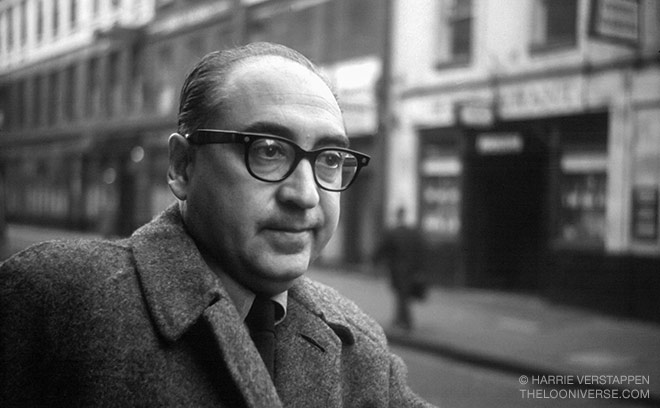
Saul and Elaine Bass

Saul Bass

Saul Bass was a very famous graphic designer and film maker. Was born in the 8th of May 1920 and died on the 25h of April, 1996. He was born in Bronx, New York. After completing Highschool Saul studied ant the Art Students League in New York and then later attended Brooklyn college where h was taught by Gyorgy Kepes, a Hungarian who worked as a film designer before moving to Los Angeles in 1946. Bass studied graphic design and business to set up his own practice and began his association with Hollywood by designing posters for upcoming films. His poster for 'Carmen Jones' impressed the director of the film (Otto Preminger) so much that he was then asked to create the opening sequence to the film. He had a successful 40 year and was considered to be one of Hollywood's greatest film makers. He's most known for his title sequences in the films 'The man with the golden arm' and 'Pyscho'. In 1955 Elaine Makatura, an American title designer (also born in New York), came to work for Saul and after the production of the opening sequence to 'Spartacus' the two got married. Saul and Elaine continued to work and co-produce with each other after their marriage. In fact, after the birth of their children, the two started concentrating on opening sequences and short films. Some of the title sequences the two worked on are; 'West Side story'-1961, 'The victors'-1963, 'seconds'-1966, 'Grand Prix'- 1966, 'Goodfellas'-1990' and 'Casino' in 1995 (their last sequence together). In the mid 1960s, Saul and Elaine decided to focus on their children and film making and moved away from opening titles. One of the  short films the two made together is 'Why man creates'- 1968, which won an Oscar. 

Analysis of the opening sequence of 'Casino';

The beginning of the opening sequence to 'Casino' starts with the ambient sound of the wind as the titles and credits appear on a black screen in white bold letters. The camera footage starts with a man dressed in a flamingo pink suit and white trousers opening a glass door into the street. the sound of his footsteps are amplified against the sidewalk by a folly artist. The camera pans right, following the man across the street. We suddenly hear the narration of the characters voice as he talks about who to trust. In the background of the camera shot we see a car pull away and hear the diegetic sound of the tires along the road as it turns out of shot. The man gets takes out his keys from his pocket and we hear the sound of the metal keys clash against each other as he unlocks and gets into his car. When he starts the car there is a split second of the engine starting before the car explodes. The explosion immediately engulfs the screen and continues to expand as SFX. During the explosion non-diegetic Opera music starts to play, creating a tone and atmosphere of chaos as the music is loud, dramatic and sounds ritualistic. More titles start to appear such as the names of actors as we continue to hear the dramatic classical singing. During the titles appearance, we can see the silhouette of the now dead man fall from on side of the screen to the other. The explosion slowly turns red and transforms into a shimmer of red lines. The colour red representing blood, fire and hell. The sound of fireworks can be faintly heard at a low volume behind the music for a brief period of time. The red shimmering lines then turn into small symbols that move quickly across the screen from the top left to the bottom right, keeping the theme of black and red. The theme of black and red is temporarily abandoned as small circular lights, similar to a glow up sign, move right to left across the screen which could be interpreted as letters on an electronic sign. however, we cannot tell what they are as they too zoomed into the screen. this adds suspension and provides an artistic title opening for the film. More flashing blue lines are introduced onto the screen. This raises enigma codes such as 'what are the lines for?' and 'what do the colours represent?'. The music goes quickly fades into an instrumental for a few seconds as the camera cuts to flashing colourful 3D letters. This now confirms the audiences presumption that the lights are indeed small Led bulbs to a glow up sign. The singers return to the music as the volume increases. Simultaneously, an array of flashing lights march across the screen in a ripple like effect in numerous colours. The music continues and the themes of blue, black and red seem to consistently appear in the upcoming CGI fast paced clips. The image cuts to another glow up sign that has been overlaid several times over with some added transparency. It is now that we can clearly see that the lights are very similar to a casino's. This makes the image seem disoriented, presumably to represent the busy atmosphere of a casino (and possibly the alcoholic drinks served at the casino bar as the image can be seen several times over, similar to when someone is drunk). The image changes again to what looks to be a light up tower. The same falling man re appears on the screen and is tracked by the camera as he goes down the array of lights. The image is then slowly engulfed in flames as the man reaches the bottom of the screen. The burning flames fade out of view whilst a silhouette of what looks to be the same man standing in a casino in different clothes fades into the screen. However, we cant be sure it is the same man as his back is towards the camera. This ads mystery to the sequence and raises more enigma codes like 'why is the man alive again?' , 'where and when are we in the story?'. The non diegetic music slowly fades into silence letting the film begin.

My final opening sequence

 'The Collector'- Final Media Opening Sequence:  The collector link